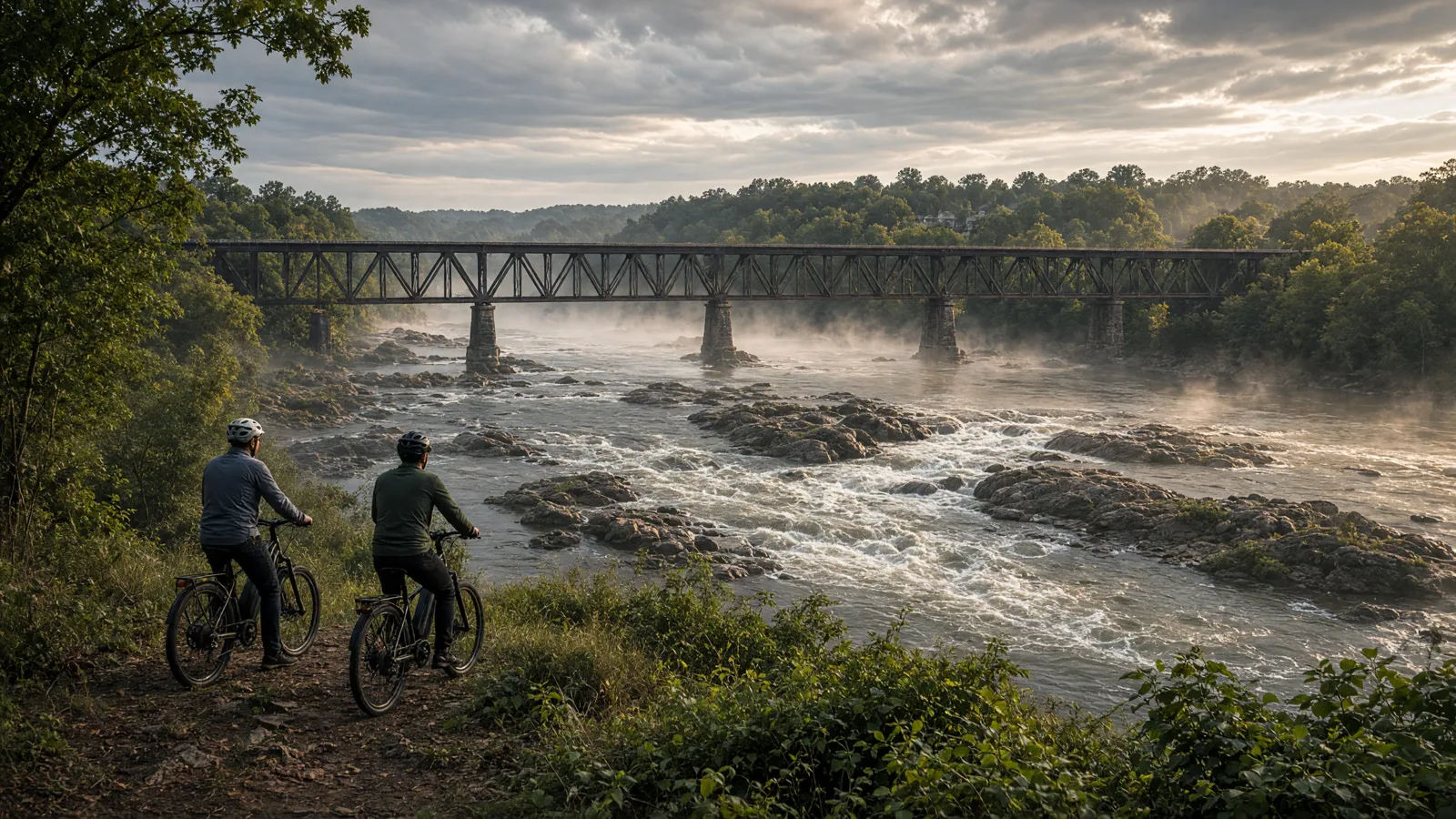
Things To Do on an eBike in City of Richmond, VA
Richmond City County rides come down to who manages the route. The Virginia Capital Trail Foundation sets clear rules for the Virginia Capital Trail. The James River Park System has trail pages but no stated eBike policy. Several regional trails are still being built. This guide sticks to what the managers and the Code of Virginia say.
Plan around your bike's class, because Class 1 and Class 2 eBikes are welcome on the Capital Trail, but Class 3 is not. Before any ride, check posted signs and the manager's page. If you still need a bike or repairs, see the Richmond City County eBike shops listings.
Where to ride in Richmond City County
Most rides here start in Richmond itself. The Virginia Capital Trail runs from Richmond to Jamestown, so it is the natural pick for a longer day. The James River Park System covers shared riverside routes inside the city, including the Floodwall Park path. Regional routes such as the Fall Line Trail are being built in phases. Ashland Trolley Line and Chester Linear Park are outside Richmond city, in Hanover and Chesterfield, so treat them as regional only.
The Virginia Capital Trail is the longest route in the area, running from Richmond to Jamestown, and it has this eBike rule: Class 1 and 2 yes, Class 3 no, 20 mph recommended. The James River Park System is a set of shared routes with no stated eBike policy, so signs decide. The Floodwall Park path is narrow and pedestrian-oriented. Opening status for the Fall Line Trail and Cannon Creek Greenway can change. Surface details for every route are not published. Check the manager's map or posted signs.
eBike shop hubs
Shop listings for this county are grouped under one city page. Start there to compare bicycle shops, repair options, rentals and bike share stations before you pick a route.
Rental and tour contacts
Two rental cards are listed on this page: BASKET & BIKE and VCU RamBikes. Contact them to confirm whether they rent eBikes, which class, and what hours and rules apply.
BASKET & BIKE🚲 Rentals
VCU RamBikes🚲 Rentals

Named eBike routes and access checks
1. Virginia Capital Trail: Richmond toward Jamestown
The Virginia Capital Trail is the main long ride for eBike users in Richmond. The Virginia Capital Trail Foundation manages it, and it runs from Richmond to Jamestown. That makes it good for a short out-and-back from the city or a longer day if your battery and legs allow. The Foundation allows Class 1 and Class 2 eBikes and e-trikes. Class 3 is not allowed. It recommends a maximum of 20 mph and asks riders to go slower in crowds. Expect walkers, runners and other cyclists, especially when the weather is good. Read the trail rules before you go.
Distance: Runs from Richmond to Jamestown, per the Virginia Capital Trail Foundation; start: Several access points; check the Foundation's trail information; surface: Check the Foundation's page for current surface.
eBike access: Class 1 and Class 2 eBikes and e-trikes are allowed. Class 3 is not allowed. The recommended maximum speed is 20 mph, and slower in crowds. Etiquette and planning: Keep your speed down around walkers and families. Pass with a clear warning, stay to the right, and carry a charge plan for the distance you choose. Managing source: Virginia Capital Trail Foundation, trail rules.
2. James River Park System, shared riverside routes
The James River Park System is Richmond's riverside park network, and its trails page describes shared routes. That page does not state an eBike policy, so do not assume every trail is open to eBikes. Conditions and rules can change by trail and by section. Some routes are likely to be crowded on nice days with walkers and other users. The practical approach is simple: read the park's trails page, check signs where you enter, and ride slowly. If a trail is posted against eBikes or looks unsuited to your bike, choose another route.
Distance: Distances vary by trail; check the James River Park trails page; start: James River Park System: several access points; check the manager map; surface: James River Park System: check the manager page for current surface.
eBike access: No eBike policy is stated on the trails page. Check posted rules at each entrance, and follow any sign that restricts eBikes. Etiquette and planning: Yield to walkers, slow down on shared sections, and do not push a motor on narrow or busy trails. Ask the park if you are unsure. Managing source: James River Park System, trails page.
3. Floodwall Park path, narrow and pedestrian-oriented
The Floodwall Park path is part of James River Park. It is narrow and pedestrian-oriented. That means it is better for a slow, careful pass than a fast ride. Do not treat it as a place to test your eBike's top speed. With walkers sharing the space, even a Class 1 pedal-assist bike can feel too fast if you are not paying attention. A stated eBike policy for this path is not published. Check the manager's map or posted signs before you ride, and get off and walk if the path is crowded.
Distance: Path no published length; check the James River Park trails page; start: Floodwall Park path: several access points; check the manager map; surface: Floodwall Park path: check the manager page for current surface.
eBike access: No eBike policy is stated. Check posted rules before you ride, and follow any sign that restricts eBikes. Etiquette and planning: Treat it as a walking path first. Ride at walking pace, ring a bell early, and dismount where it is too crowded to pass safely. Managing source: James River Park System, trails page.
4. Fall Line Trail, regional route opening in phases
The Fall Line Trail is a regional route that is under construction and opening in phases. That is all the manager pages support, so check current status before building a ride around it. Do not assume that every section is finished, connected or open. When a section is open, the same basic Virginia rules apply: eBikes are generally allowed where bicycles are, unless a locality or agency restricts a shared-use path. A locality can restrict Class 1 or 2 after notice and hearing, and can prohibit Class 3 on a particular path. Look for current signs and manager notices.
Distance: Final no published length; check the managing agency; start: Fall Line Trail: several access points; check the manager map; surface: Fall Line Trail: check the manager page for current surface.
eBike access: State law generally allows eBikes where bicycles are, but a locality or agency may restrict a path. Check each open section's posted rules. Etiquette and planning: Confirm that your section is open before you go. Expect construction detours, and pack a charge plan for a route you have not ridden. Managing source: Code of Virginia, 46.2-908.1.
5. Cannon Creek Greenway, check current status
Cannon Creek Greenway is a route for e-bike riders to consider. Distance, surface, trailhead and eBike policy are not published. Check the manager's map or posted signs before you ride. Also check the City of Richmond or the managing agency for open sections, closures and rules. Under Virginia law, eBikes are generally allowed where bicycles are, but a locality can restrict Class 1 or 2 on a path after notice and hearing, and can prohibit Class 3.
Distance: No published Distance; check the managing agency; start: Cannon Creek Greenway: several access points; check the manager map; surface: Cannon Creek Greenway: check the manager page for current surface.
eBike access: State law generally allows eBikes where bicycles are, but a locality may restrict a path. Confirm posted rules and open sections before riding. Etiquette and planning: Verify status first, then ride slowly on any shared section, give walkers room, and turn back if a section is closed or unsigned. Managing source: Code of Virginia, 46.2-908.1.
6. Ashland Trolley Line and Chester Linear Park, regional only
Ashland Trolley Line and Chester Linear Park are not in Richmond city. They are in Hanover and Chesterfield, so they are regional options rather than city rides. They are separate from the city routes. Distances, surfaces, trailheads and eBike policies for either one are not published. If you want to ride them, contact the managing locality, check the manager's map or posted signs, and do not assume Richmond rules apply. State law still sets the class definitions and Class 3 helmet rule.
Distance: Distances are not given; check each locality; start: Ashland Trolley Line and Chester Linear Park: several access points; check the manager map; surface: Ashland Trolley Line and Chester Linear Park: check the manager page for current surface.
eBike access: Virginia law applies, but localities can restrict paths. Check Hanover or Chesterfield rules and posted signs before you ride. Etiquette and planning: Plan the drive or ride to the start, confirm the route is open, and follow local signs. Do not assume city rules carry over. Managing source: Code of Virginia, 46.2-908.1.
Planning a Richmond City County ride
Charging is not covered, so plan your range with margin. For the Virginia Capital Trail, decide your turnaround point before you leave, since it runs from Richmond to Jamestown and a long out-and-back can drain a battery. Charge fully at home or at the shop, and ask a rental business what its return and battery rules are. Ferry and transit details for these routes are not published. Check the manager's map or posted signs.
Crowds matter more than speed. The Capital Trail Foundation recommends slowing in crowds, and the Floodwall Park path is described as narrow and pedestrian-oriented. Check manager pages for closures, since the Fall Line Trail is opening in phases and conditions can change. Look at posted signs at each entrance. If you need parts or service first, see eBike shops in Richmond.
Half-day and full-day eBike plans
Half day: Ride a short out-and-back on the Virginia Capital Trail with a Class 1 or Class 2 eBike. Keep to the 20 mph recommended maximum and slow down where it is busy. Pick a turnaround point before you start, so your battery lasts for the return trip. This is the simplest plan because the trail rules are clearly stated.
Full day: Spend more of the day on the Virginia Capital Trail, which runs from Richmond to Jamestown. Plan your turnaround carefully, bring a charge plan, and expect other users along the way. If you want a break from the trail, check the James River Park trails page for a slow shared route, and follow the posted rules there.
Rainy-season backup: If the weather turns, use the time to prepare. Visit a Richmond bicycle shop for a tune-up, or contact BASKET & BIKE or VCU RamBikes about rentals. Check the Fall Line Trail and Cannon Creek Greenway status before you plan a future ride, since opening status may change.
What not to ride in Richmond City County
Class 3 on the Virginia Capital Trail: Class 3 eBikes are not allowed on the Virginia Capital Trail. The Foundation allows only Class 1 and Class 2 eBikes and e-trikes. If your bike is Class 3, choose a different route, and check the posted rules for each place you ride.
Floodwall Park path when crowded: The Floodwall Park path is narrow and pedestrian-oriented. No eBike policy is stated, so check posted rules. Even if allowed, a crowded path is a bad place for a motor. Walk your bike where you cannot pass safely.
Unposted James River Park trails: The James River Park trails page states no eBike policy. Do not assume that every trail is open to eBikes. Natural-surface trails can be restricted by the manager, so follow signs and ask the park when in doubt.
Unfinished regional sections: The Fall Line Trail is under construction and opening in phases. Do not ride into closed or unfinished sections. Confirm open segments with the manager, and follow detours and signs for any construction area.
When to ride Richmond City County
The manager pages give no hours or seasonal closures, so check each manager before you go. In general, Virginia summers are hot and humid, so early morning or evening rides are more comfortable, and bring water. Spring and fall are often easier for longer rides, though weather varies. Pleasant weekend days can bring more walkers, runners and cyclists to shared routes. The Capital Trail Foundation asks riders to slow down in crowds, so weekday or early rides may be easier.
Virginia eBike laws and route permission
Virginia defines an "electric power-assisted bicycle" in Va. Code 46.2-100. The law sets three classes. Class 1 is pedal assist only, and the motor stops helping at 20 mph. Class 2 has a motor that may move the bike without pedaling, and it also stops helping at 20 mph. Class 3 is pedal assist only and stops helping at 28 mph. The motor must be 750 watts or less, and the bike must have operable pedals. Know your class before you ride, because the rules differ by class.
Under Va. Code 46.2-904.1 and 46.2-908.1, compliant eBikes have the rights and duties of bicycles. They are generally allowed where bicycles are, including roads, shoulders, bike lanes and shared-use paths. A locality or state agency may restrict Class 1 or Class 2 eBikes on a path after notice and hearing. It may prohibit Class 3 eBikes on a particular path. A person under 14 may operate a Class 3 only under the immediate supervision of someone at least 18. Sidewalk riding is set locally, so check city or county rules.
Class 3 operators and passengers must wear a properly fitted and fastened helmet that meets CPSC or ASTM standards. A Class 3 eBike must also have a speedometer. Compliant eBikes need no driver's license, registration, title, insurance or license plate. Each eBike should carry a manufacturer label showing its class. For a plain-language summary, read our guide to Virginia eBike laws.
Trail access depends on who manages the trail. On paved shared-use paths, a locality or state agency can restrict Class 1 or Class 2 eBikes, but only after notice and hearing. The same bodies may prohibit Class 3 eBikes on a particular path. Natural-surface trails can be restricted by the manager. A route that works for one eBike may be closed to another, so confirm with the manager before you go.
Your class decides where you can go, so keep the manufacturer class label legible on the bike. If you ride a Class 3, make sure the speedometer works and that everyone aboard, passengers included, has a helmet. A rider under 14 needs an adult of at least 18 supervising closely on a Class 3. The state sources we use do not list specific speed limits for trails, so follow whatever limits the trail manager sets.
Rules here depend on the route manager. The Virginia Capital Trail Foundation allows Class 1 and Class 2 eBikes and e-trikes on the Capital Trail and does not allow Class 3. It recommends 20 mph at most. Read the Virginia Capital Trail rules for the current wording.
The James River Park trails page describes shared routes but states no eBike policy. That is a gap, not a permission. Check James River Park trails and posted signs. State law lets a locality or agency restrict Class 1 or 2 on a path after notice and hearing, prohibit Class 3 on a particular path, and lets managers restrict natural-surface trails; see Va. Code 46.2-908.1.
No conflict appears between the manager pages on the Virginia eBike classes. There are also no dated pending rule changes for Richmond. The Fall Line Trail is under construction and opening in phases, so rules for new sections may appear later. Statewide, a Class 3 rider and passenger must wear a helmet, and Class 3 needs a speedometer, so see Virginia eBike laws.
Frequently asked questions
What is the fastest eBike allowed on the Capital Trail?
Class 1 and Class 2 eBikes are allowed. Both stop assisting at 20 mph under Virginia law. The Virginia Capital Trail Foundation also recommends a maximum of 20 mph and slower speeds in crowds. Class 3, which assists up to 28 mph, is not allowed on the trail.
How far does the Virginia Capital Trail go?
It runs from Richmond to Jamestown, per the Virginia Capital Trail Foundation. The manager pages do not give a mileage figure, so check the Foundation before planning. For a first ride, choose a short out-and-back, and set a turnaround point based on your battery.
Does a Class 2 eBike work on the Capital Trail?
Yes, the Foundation allows Class 1 and Class 2 eBikes and e-trikes. A Class 2 motor may propel the bike without pedaling and stops assisting at 20 mph. Even so, slow down around walkers and families, especially when the trail is crowded.
Is the Floodwall Park path good for eBikes?
The manager pages describe it as narrow and pedestrian-oriented, and no eBike policy is stated. Check posted rules before you ride. If it is open to you, ride at walking pace and be ready to dismount. A different route may suit a faster bike better.
Do I need a helmet on an eBike in Richmond?
Virginia requires a properly fitted, fastened helmet meeting CPSC or ASTM standards for Class 3 operators and passengers. The manager pages do not list a general helmet rule for Class 1 or 2. A helmet is still a sensible choice on any shared route.
Can kids ride an eBike here?
A person under 14 may operate a Class 3 eBike only under the immediate supervision of a person at least 18. Class 3 is not allowed on the Capital Trail anyway. For other routes, check the manager's rules and choose a quieter path.
Can I ride the Fall Line Trail now?
For e-bike riders: This route is regional, under construction, and opening in phases. Only open sections are rideable. A section list is not published. Check the manager's map or posted signs for current status before you go, and follow signs for closures or detours.
Where can I rent or repair an eBike?
Two rental options are BASKET & BIKE and VCU RamBikes, plus bicycle shops and repair services. No rental option is categorized as an electric bicycle store, and e-bike availability is not published, so call first and check the manager's map or posted signs. For e-bike shops in Richmond, compare listings at eBike shops in Richmond.
All eBike shops in Richmond City County
Ready to find a bike, rental or repair? Browse all Richmond City County eBike shops and compare the 22 listings before you head out.