Things To Do on an eBike in Kauai County
Kauai rewards riders differently than the other islands. There is no big-city grid and no resort-strip cycling culture: the county is one island -- Kauai plus tiny Niihau -- with a compact east-side town corridor, a resort south shore, a dramatic west side, and a green north shore. The riding is defined by trade winds, narrow scenic roads, and one genuinely great coastal path.
This guide covers the named places worth planning around, what each area is actually like on two wheels, and the rules that apply. It links the live directory so you can find rentals and repair without leaving the planning flow.
Where to ride in Kauai County
Kauai is roughly circular, and nearly every ride starts from one of five hubs: Kapaʻa on the east (Coconut Coast), Līhuʻe in the center-south, Koloa and Poipu on the south shore, Waimea on the west, and Hanalei plus Princeville on the north. Distances are short by mainland standards -- the whole island is about 30 miles across -- but the terrain swings from pancake-flat coastal path to canyon-country climbs within a few miles, and the trade winds decide how easy the return leg feels.
Access is the other half of the plan: beach paths, state parks, and canyon roads are each managed by different agencies with different rules, so every route section below names the place, describes the riding honestly, and tells you what to verify before you go.
1. Ke Ala Hele Makalae -- the Royal Coconut Coast path (Kapaʻa area)
Ke Ala Hele Makalae -- "the path that goes by the sea" -- is Kauai's signature ride: a paved, mostly flat coastal multi-use path along the east side near Kapaʻa and the Royal Coconut Coast. It is the best answer for almost every rider: rental-friendly, scenic, and continuously extended in phases over the years. Because the county builds it in segments and closure status changes with construction, confirm which sections are currently open with the County of Kauai before you plan a long out-and-back. E-bikes are commonly ridden on its open sections, but posted rules at each access point control where motorized assist is allowed. Rental shops in Kapaʻa put you closest to the path.
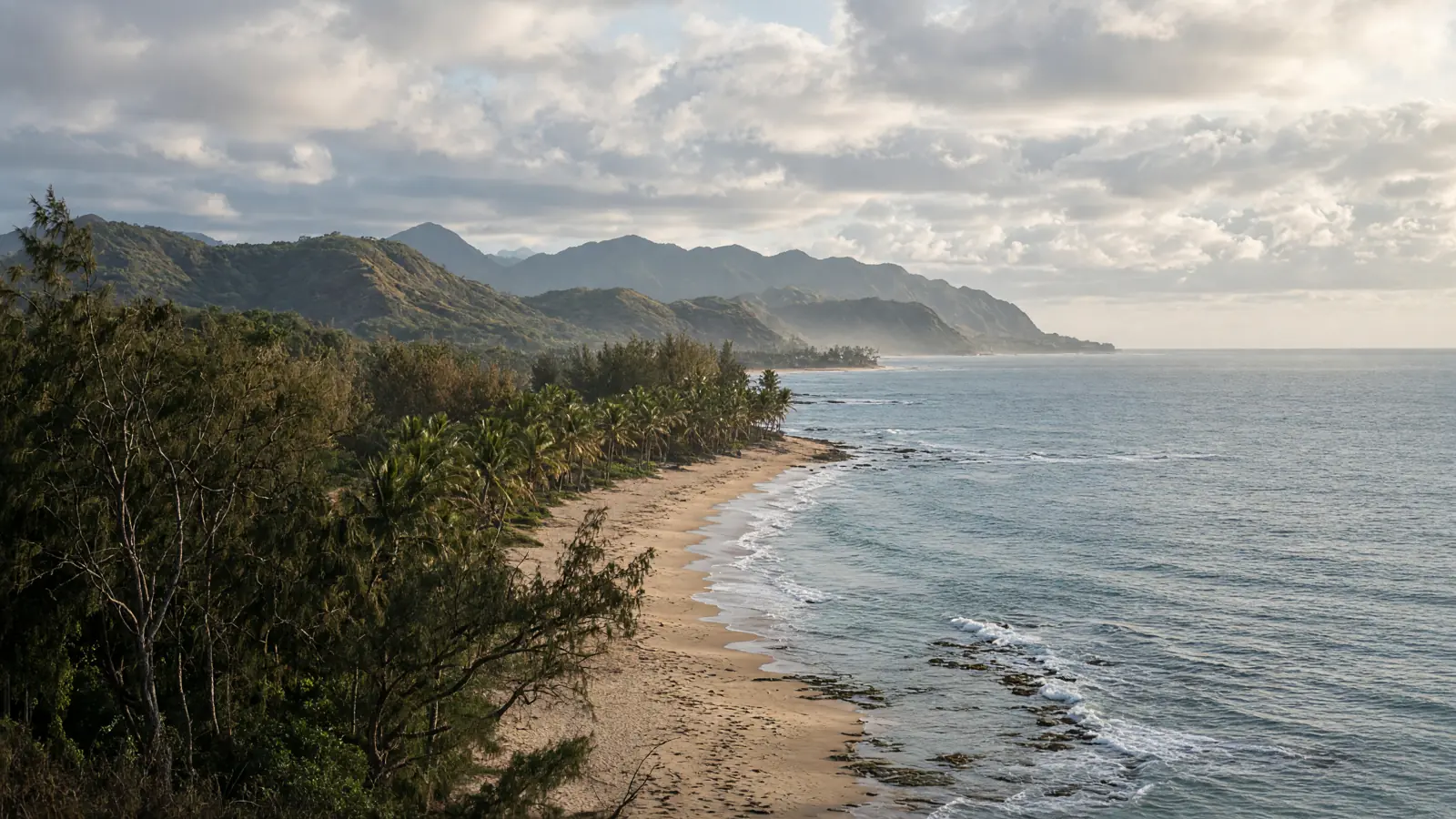
Kauai's east-side coastline: the flat, scenic setting that makes Ke Ala Hele Makalae the island's marquee ride.
2. Kapaʻa town and the Coconut Coast (flat town miles)
Kapaʻa is the practical base for most Kauai eBike days: it has the county's largest cluster of rental and tour operators, flat roads toward the coast, and direct access to the path corridor above. Town riding means sharing roads with rental cars and pedestrians near the beach strip, so ride the marked facilities where they exist and walk the busiest blocks. Shops: eBike rentals in Kapaʻa.
3. Koloa and Poipu -- the south shore (resort-coast riding)
The south shore around Koloa and Poipu is Kauai's resort coast: warm, sunny, and built around short scenic rides between beaches, shops, and the historic sugar-town center of Koloa. Roads are shared with rental traffic and can be busy midday, and path/trail access varies by location -- check posted rules at each resort-area access point. This is the best area for a casual half-day rental from Koloa eBike rentals, including guided eBike tours.
4. Līhuʻe -- the central hub (practical, not scenic)
Līhuʻe is the government and airport town: useful for logistics, less rewarding as a destination ride. Its value is practical -- it sits centrally, hosts repair-capable shops, and connects toward the east-side path corridor. Treat Līhuʻe as your starting or service point rather than the ride itself, and use Līhuʻe eBike shops for mechanical help before heading out.
5. Hanalei and Princeville -- the north shore (seasonal, verify access)
The north shore around Hanalei and Princeville is Kauai at its most dramatic: green mountains, taro fields, and one-lane bridges along Kuhio Highway. Riding here is road riding on a narrow scenic highway, not a separated path experience, and the single bridge corridor is genuinely constrained -- plus north-shore access has historically been affected by flood-related closures. Check current road and bridge status with the state before planning any north-shore ride, go early, and use lights. Rentals exist at Princeville.
6. Waimea Canyon -- look, do not ride (expert-only exception)
Waimea Canyon is the one place this guide says do not ride: Waimea Canyon Drive is narrow, steep, heavily trafficked, and has minimal shoulder for most of its length. It is a drive-to lookout destination. If you are an experienced road rider with a lightweight e-bike and full traffic discipline, the climb is a known challenge ride -- but it is not a rental-day outing, and canyon rim parking areas sit inside state-managed land where posted rules apply. Treat the canyon as a scenic drive between coastal rides.
Half-day and full-day eBike plans
Half day, the path (2-3 hours): Pick up a rental in Kapaʻa, ride the currently open Ke Ala Hele Makalae sections at an easy pace, and finish with lunch in town. Flat, forgiving, and the right first Kauai ride.
Half day, south shore (2-3 hours): Rent in Koloa, loop through the historic town, and ride toward the Poipu coast on low-speed roads with frequent stops. Add a guided eBike tour if you want the history narrated.
Full day, coast-to-town (4-6 hours): Base in Kapaʻa, ride the path early before the trade winds build, then add town miles and a café stop. Watch the wind: the return leg into an afternoon headwind is the difference between a cruise and a workout.
Full day, two-base island tour (drive-assisted): Many visitors ride the east-side path one day and the south shore another, driving between bases. This is the realistic way to see both coasts by e-bike without re-climbing the island's middle.
What not to ride
Waimea Canyon Drive: narrow, steep, busy, minimal shoulder. Drive it; ride somewhere else.
Sand and unmarked beach access: soft sand stops e-bikes immediately and dune vegetation is protected; stay on designated paths.
The Kuhio Highway one-lane bridge corridor: even confident road riders should think hard about bridge timing, queueing traffic, and limited sightlines on the north shore.
Any trail signed for hikers only: Kauai's famous interior trails are muddy, steep, and often closed to bikes outright; the coastal path is the e-bike's home terrain.
When to ride
Kauai rides year-round. Mornings are coolest and calmest; trade winds build through midday and peak in the afternoon, so plan out-and-backs with the wind. Winter (November through March) brings bigger surf and rain showers to the north shore, which can affect coastal exposure and access. Summer is hot but dry on the south and west sides. Check the forecast and any county or state access notices the morning you ride.
Where to rent and repair
Kauai's rental market is real, unlike many mainland counties: guided eBike tours and hourly rentals operate on the south shore and east side. The four rental-flagged listings on the Kauai County directory are the practical starting points, and the directory also tracks repair-capable bicycle shops in Līhuʻe and elsewhere. Call ahead for fleet size, sizes, and helmet inclusion.
Rental and tour operators
These four rental/tour listings are preserved exactly as the directory records them. Confirm fleet availability and current operation by phone before you plan a ride day.
BikeIt Poipu - Kauai Ebike Tours🚲 Rentals
Biking In Paradise LLC🚲 Rentals
Modern Hawaiian Collective🚲 Rentals
Kauai EBikes🚲 Rentals
Hawaii eBike rules snapshot (with county caveats)
Hawaii's statewide traffic code treats people on bicycles as having roadway rights and duties under HRS 291C-142. For electric bicycles specifically, classification and where each class may ride are shaped by state provisions and county ordinances -- and those differ between Honolulu, Maui, Hawaii, and Kauai counties, and they change over time. Do not assume a statewide answer for path access, registration, or minimum age: check the current County of Kauai rules and Hawaii DOT guidance before you ride, and follow posted signs at beaches, paths, and parks.
For current statewide policy pages, see Hawaii DOT's bicycle program.
Frequently asked questions
What is the best eBike ride in Kauai County?
The Ke Ala Hele Makalae coastal path on the Royal Coconut Coast near Kapaʻa is the signature ride: flat, scenic, and the segment network continues to expand. Confirm current open segments with the county before you go, because construction phases change access.
Can you rent an eBike on Kauai?
Yes. Rental and tour operators are listed in Koloa, Princeville, Kapaʻa, and Līhuʻe on the county directory. Call ahead to confirm fleet availability, sizes, and helmet inclusion rather than assuming walk-up stock.
Are eBikes allowed on Kauai beaches and beach paths?
Sand riding is generally not allowed or practical, and beach-path access is controlled by county and state rules that vary by location. Check posted signage and the managing agency before riding any coastal path segment.
Do you need to register an eBike in Hawaii?
State law treats bicycles in the traffic code, but registration and age requirements for e-bikes can differ by county ordinance. Do not rely on a generic answer: check the current County of Kauai ordinance and Hawaii DOT guidance before riding.
What should I know about riding in Waimea Canyon?
Waimea Canyon Drive is a narrow, steep, high-traffic scenic road with limited shoulder. It is a drive-first destination; most riders experience it by vehicle and ride the flatter coastal areas instead. Treat any canyon riding as expert-only with full traffic precautions.
When is the best time to ride in Kauai?
Year-round is possible, but mornings are cooler and calmer before the trade winds build. Winter swells and rain can affect coastal exposure, so check the forecast and surf conditions for your specific shore.




Planning a Kauai eBike day
The realistic Kauai plan is simple: rent near the terrain you want. The east side near Kapaʻa owns the coastal path experience; the south shore around Koloa owns the resort-coast loops; the north shore around Princeville and Hanalei is scenic road riding that needs current access checks; and Līhuʻe is the practical service stop. The canyon is a drive. Wind, not distance, is the planning variable that matters most, and the Kauai County directory keeps every rental and repair option in one place.