Things To Do on an eBike in Hawaii County
Hawaii County is the Big Island: a county-sized riding landscape where the dry Kona and Kohala coast, wet Hilo side, Waimea uplands, Waikoloa resort coast, and high Volcano country each demand a different plan.
This guide favors useful starting points over invented trail mileage. Access, weather, road conditions, and land-manager rules can change quickly. Confirm the specific route before you ride, and use the county directory to find a rental, sales, or repair shop near your starting point.
Where to ride on Hawaii Island
Hawaii County rewards riders who plan around geography. The island is not one continuous easy path: a short coastal outing can become a steep, exposed climb, while a route that looks close on a map may cross a fast highway or a weather boundary. Pick one zone, carry enough water and battery for the return, and leave room to turn around.
1. Kailua-Kona coast and Aliʻi Drive
Kailua-Kona is a practical west-side launch point for oceanfront riding, errands, and a gradual coastal outing. Aliʻi Drive mixes local traffic, visitors, driveways, and changing shoulders, so ride defensively and do not treat it as a separated cycleway. Use nearby rental or repair listings to confirm a suitable bike, parking, and a route that matches your comfort level. The dry Kona climate can be hot even when the ocean looks calm; start early, carry water, and check wind before committing to a longer out-and-back.
2. Hawaii Volcanoes National Park area
The Volcano and Mauna Loa Estates area is cooler, higher, and more weather-sensitive than the coast. Hawaii Volcanoes National Park is the marquee destination, but National Park Service rules govern each unit and road. Check the official Hawaii Volcanoes National Park page for alerts, closures, and current conditions before riding. Do not infer bicycle permission from a map, and do not plan around eruption activity or crater access without a same-day official check.
3. Hilo and the east side
Hilo is a useful town base for a lower-key ride between errands, waterfront viewpoints, and services, but the wet-side climate changes traction and visibility. Rain can arrive quickly, roads can be slick, and roadside space varies. Ask a Hilo shop about current conditions rather than assuming every path or scenic road allows every eBike class. A town-based half day can be the right choice when cloud, rain, or a late start makes a longer island crossing unwise.
4. Waimea and Parker Ranch uplands
Waimea offers an inland alternative to the coast, with rolling ranch-country scenery and a cooler, wind-exposed feel. Exact access depends on the road or property, so use public roads and paths only where signs and current rules permit. Elevation and wind reduce battery range and can make the return harder than the outward leg. A rental conversation in Waimea is a good time to ask about grade, weather, charging, and a conservative turnaround point.
5. Waikoloa Beach Resort and Kohala coast
Waikoloa is a resort-coast base with internal roads and paths that may have property-specific rules. Confirm which paths allow the class and equipment you are riding, and respect signs, pedestrians, private property, and resort traffic. The coast can feel easy while the sun and wind quietly increase the effort. A short resort-area outing pairs well with a morning start and a return plan that does not depend on an unconfirmed path connection.
6. Saddle Road context: a do-not-ride choice
Daniel K. Inouye Highway, commonly called Saddle Road, is a high-speed cross-island highway with major elevation and weather changes. It is not a casual eBike route. Do not use it as the connector between Kona, Waimea, Hilo, or Volcano. Riders seeking a cross-island itinerary should arrange an appropriate vehicle transfer and choose a local ride on the destination side instead.
Planning the practical details
Big Island rides are easier when the logistics are treated as part of the route. Confirm where the bike is picked up, whether a charger or spare battery is available, and how the rental company handles a weather change. Ask whether the recommended route uses a public road, a shared facility, a resort property, or land with a separate permit or access rule. Those distinctions matter more here than a generic list of “best trails.”
Build the day around a turnaround that leaves reserve battery for wind and climbing. Elevation, headwind, rough lava-edge surfaces, and repeated stops can all change consumption. Carry water and sun protection on the dry west side, and bring a light rain layer for Hilo and Volcano. A phone signal is not a substitute for navigation, so download the information you need and tell someone where you intend to ride.
Visitors moving between Kona, Waimea, Hilo, and Volcano should separate transport from riding. A bicycle day on one side of the island is more realistic than treating Saddle Road as a recreational connector. If a group has different abilities, choose a town or resort-area outing with a clear bailout option. A shop can help match tire width, assist level, fit, and gearing to the surface and grade you actually expect.
For a first ride, favor a short known corridor over a remote destination. Stop to reassess if cloud, rain, heat, wind, or traffic changes. If access signage is unclear, turn around and ask the responsible agency or property owner. This approach protects the ride without pretending that conditions are stable across an island with several climate zones.
Surface, traffic, and turnaround notes
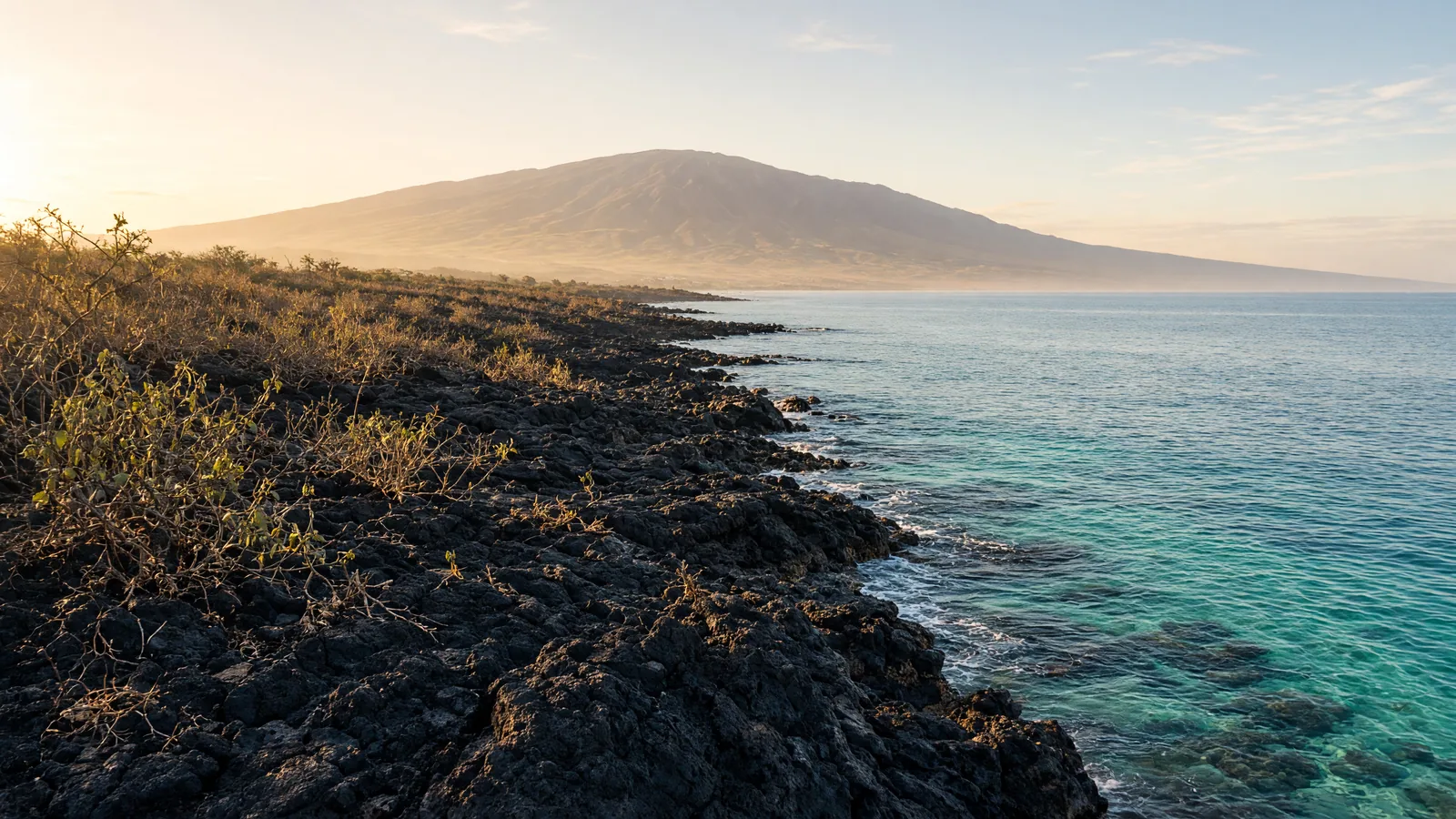
Lava rock is visually striking but it is not a promise of rideable surface. Keep tires and wheels on the confirmed public route, avoid edging onto rough shoreline rock, and treat any unmarked spur as an unknown. On paved roads, position yourself predictably, watch for turning traffic, and choose daylight conditions with good visibility. On shared facilities, slow down around walkers and families and yield according to posted signs.
A route that feels short on the map may involve heat, grade, wind, or a long return without services. Before leaving town, identify water, food, charging, and a place to stop if the weather changes. If the bike is rented, keep the shop's contact information and understand the return window. If it is your own bike, inspect brakes, tires, lights, and fasteners after transport. These simple checks are especially useful when the day's plan crosses from a dry coastal zone into cooler upland weather.
Hawaii Island also rewards flexible scheduling. A clear Kona morning does not guarantee clear conditions near Volcano, and a calm resort path does not describe the highway beyond it. Make the ride the destination, not a test of how much of the island can be crossed. If the route becomes uncomfortable or access is uncertain, turn around, return the bike safely, and use the directory to find local help for the next attempt.
Half-day and full-day plans
Half-day: Kona coast sampler
Start early in Kailua-Kona with a rental or a safety check from a local shop. Keep the first outing coastal and flexible, using a conservative turnaround rather than chasing a fixed distance. Pause for water, inspect battery use, and return before afternoon wind and heat build. This plan works for visitors who want ocean scenery without committing to a remote route.
Half-day: Hilo town and service-first loop
Begin near a Hilo shop, ask about rain and road conditions, and keep the ride close enough to return for a repair or battery question. Choose public streets and facilities with visible current permission, then leave time for a dry-weather change of plan. This is a useful option when the east side is wet or when a group has mixed fitness.
Full-day: two-zone Big Island day
Do not attempt to pedal between the island's major zones on a casual itinerary. Instead, select one base, arrange transport if needed, and spend the riding day inside that zone. A full day can combine a morning coastal ride with a shop-supported afternoon, or a Volcano-area outing with official condition checks and a conservative return. Keep a charged phone, food, water, layers, and a clear bailout plan.
What not to ride and when to ride
Skip Saddle Road as a recreational eBike route, avoid closed roads and restricted park areas, and do not substitute a fast highway shoulder for a confirmed bike facility. Do not assume resort paths, state lands, county roads, or National Park roads share the same rules. The best general window is often an early start, but conditions are location-specific: check rain on the Hilo side, heat and wind on the Kona side, and cold, cloud, and elevation near Volcano and Waimea.
Hawaii eBike law and access snapshot
HRS 291C-142 gives bicycle operators roadway rights and duties, but that does not create blanket access to every path, park, resort, or private road. Review the Hawaii bicycle statute and the HDOT bicycle program, then check the agency or property owner for the place you intend to ride. County and unit rules can change, so signs and current official notices control.
Frequently asked questions
Where can I ride an eBike in Hawaii County?
Start with the Kailua-Kona coast, Hilo town, Waimea uplands, Waikoloa Beach Resort, or the Volcano area. Treat each as a different riding environment and confirm current access with the relevant land manager before setting out.
Can I ride an eBike in Hawaii Volcanoes National Park?
Do not assume access. Hawaii Volcanoes National Park rules are unit-specific and conditions can change, so check the National Park Service park page and current alerts before bringing an eBike to any crater or summit-area road.
What should I check before a Big Island eBike ride?
Check weather, wind, elevation, road conditions, closures, battery range, water, and the rules for the specific path or public land. A local rental or repair shop can also help with a practical starting point.
Where can I rent or repair an eBike in Hawaii County?
The directory includes rental and service leads in Hilo, Waimea, Kailua-Kona, Volcano, and other county communities. Call ahead to confirm current inventory, pickup details, service availability, and operating hours.
Is Saddle Road a recreational eBike route?
No. Treat Daniel K. Inouye Highway, commonly called Saddle Road, as a high-speed cross-island highway rather than a casual recreational eBike route. Arrange suitable transport between riding areas and check current road conditions.
How do weather and elevation affect Big Island riding?
Wind, heat, rain, cloud, and elevation vary sharply between Kona, Hilo, Waimea, Waikoloa, and Volcano. Check current conditions, carry water and an appropriate layer, and keep a conservative battery turnaround.
Where to rent, repair, or ask locally
These four preserved listings are rental leads in Hilo, Waimea, Mauna Loa Estates, and Kailua-Kona. Call ahead about availability, pickup, fit, charging, and current route conditions.
Hawa E-Bikes🚲 Rentals
Volcano Hi E-bike rental🚲 Rentals
HI Bike Rental Station🚲 Rentals