NYC Wants to Phase Out Class 3 E-Bikes. Here's What the Bills Actually Say Before You Buy.
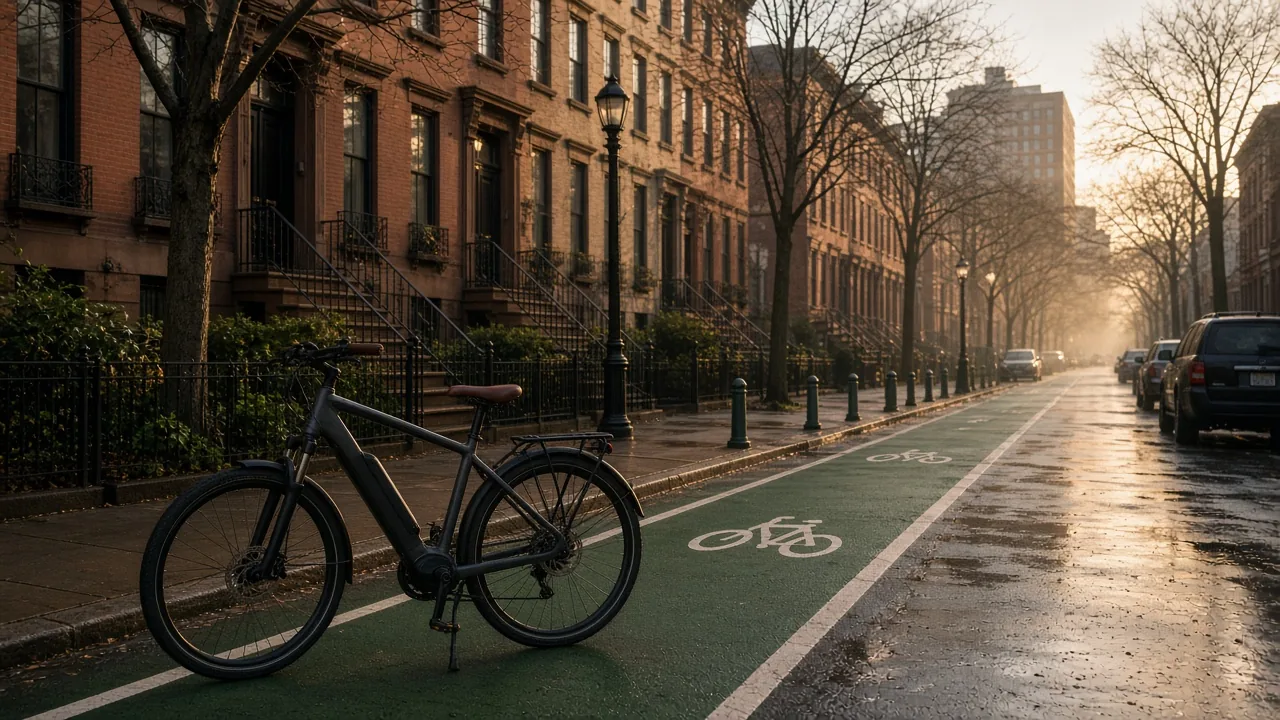
New York City is the only place in the state where a 25 mph Class 3 e-bike is legal.
Short answer: NYC has not banned Class 3 e-bikes. Int. 244 would ban selling and renting them. Int. 1110 would ban riding them, with fines no earlier than April 1, 2029. Int. 985-A would set up a trade-in. As of October 17, 2026, none has had a committee vote.
This post is general information, not legal advice. Bills can change before any vote.
You may have seen a video this fall titled "NYC BANNED E-Bikes." It didn't happen. Nobody has banned anything. There is a real proposal at the City Council, though, and if it passes as written, fines for riding a Class 3 in the city could start in April 2029 at the earliest.
Here's what the bills do, what they don't, and what that means if you own a Class 3 or have one in your cart.
Why this is a New York City story
State law sorts e-bikes into three classes, all with motors under 750 watts. Class 1 is pedal-assist to 20 mph. Class 2 adds a throttle, still capped at 20. Class 3 can push the bike to 25 mph. Under Vehicle and Traffic Law § 102-c, Class 3 exists only "within a city having a population of one million or more." In New York, that's one city.
Inside it, NYC DOT's rule sets a 15 mph speed limit for e-bikes, e-scooters and pedal-assist bikes. It took effect October 24, 2025. So the argument isn't about how fast you can ride today. It's about what the motor can do.
The hearing that started it
On September 30, three Council committees took up 23 micromobility proposals at once: 21 bills and two resolutions. Streetsblog NYC reported the hearing was still going more than 10 hours after its scheduled start. Three of those proposals go after Class 3 bikes. None has had a committee vote.
Bill 1: Int. 244 bans sales and rentals
Council Member Crystal Hudson introduced Int. 244 on January 29, 2026. The text is short. No person may "distribute, sell, lease, rent or offer for sale, lease, or rental" a Class 3 e-bike. The first violation costs $0. Each later violation within two years, on a different day, can cost up to $2,000, and every SKU counts as its own violation. The ban would start 180 days after the bill becomes law.
At the hearing, Hudson said buyers and renters would face no penalty. She also said bikes that top out at 20 mph, like the Fly 11 that's popular with delivery workers, would stay legal to sell. DOT backed the bill. The Department of Consumer and Worker Protection backed it too, with a catch: not every product lists its speed accurately, which makes enforcement tricky both online and on the street.
Bill 2: Int. 1110 bans riding them
This is the bill current owners should read. It was heard on September 30 as a preconsidered bill numbered T2026-2361. The Council then formally introduced it as Int. 1110 at its October 8 Stated Meeting and referred it to the Committee on Transportation and Infrastructure. Sponsors include Hudson and Transportation Chair Shaun Abreu. The bill would bar riding a Class 3 on city streets, in parks and in other public places, and it would take effect 24 months after it becomes law.
The penalties are slow on purpose:
- Before April 1, 2029: only a warning and information about the law.
- After that: $0 for a first violation, up to $50 for a second, and up to $100 for each one after that within two years.
- A third or later violation where the bike was ridden in a way that endangered the rider or other people or property can get it impounded.
Hudson said there are no criminal penalties. Her idea is that riders keep using their bikes until they wear out. After that they can buy a 20 mph bike, rent one, or fit a speed limiter or lower-powered motor that effectively makes the bike a Class 2.
City agencies are less sure about this one. DOT said it needs more time before taking a position. DCWP Commissioner Sam Levine was direct about it. In his testimony at the hearing he said, "We have significant concerns of unintended consequences that would most heavily impact delivery workers." He pointed to immigrant delivery workers who could lose their livelihoods and face more interactions with law enforcement.
Bill 3: Int. 985-A offers a trade-in
Transportation Chair Shaun Abreu's Int. 985-A would have DOT run a swap. Turn in a Class 3 e-bike, or an electric two- or three-wheeler built or modified to go faster than 25 mph on motor power or to exceed 750 watts, and get a Class 1 or Class 2 bike or a voucher at a participating shop. DOT would hold at least one trade-in event in every community district each year and aim for 10,000 trade-ins, though that goal can be excused if resident demand or shop participation falls short. It couldn't screen people out by job or income.
Two things to know. The program is "subject to appropriation," so it needs money first. And DOT, while it likes the idea, called it "very resource intensive" and floated a narrower version aimed at the most dangerous illegal devices.
What riders and critics are saying
Reaction doesn't line up neatly. On X, the Brooklyn group Preserve Our Brooklyn Neighborhoods called Int. 244 "smoke & mirrors," because "people who already own a Class 3 could keep riding it." That's accurate for the sales ban by itself. It's also the reason Int. 1110 was written.
Enforcement is the weak spot either way. Asked whether officers can tell a bike's top speed by looking at it, NYPD Deputy Commissioner Michael Gerber said, "No, the answer is no," per Streetsblog. Abreu has a separate bill, Int. 986, that would have police use dynamometers to test motor wattage and top assisted speed, limited to cases with probable cause.
If you ride or shop in NYC
- Don't dump your bike. None of this is law. Even under Int. 1110 as written, Class 3 riders get warnings until April 1, 2029.
- Buying a Class 3 now? Factor in the clock. If both bills pass, you're buying a bike with an expiration date inside city limits. A Class 1 or Class 2 sidesteps that.
- Read the label, not the listing. The class sticker, top assisted speed and motor wattage are what count. Our motor label guide shows where to find them.
- Ask about limiting before you spend. Hudson named speed limiters and lower-powered motors as the path for bikes people already own. Ask a shop whether your model has a manufacturer-supported 20 mph setting.
- Skip anything faster than 25 mph. NYC DOT says shops may not sell, lease or rent an e-bike that exceeds 25 mph, and faster machines are mopeds or limited-use motorcycles that need a license, plate and DMV registration and cannot use bike lanes. Our explainer on NYC's illegal e-bike crackdown covers it.
- Keep an eye on Legistar. As of October 17, 2026, it shows no committee vote on any of the three bills. Int. 244 and Int. 985-A were laid over on September 30. Int. 1110 was formally introduced October 8 and is in committee. A Council Vision Zero hearing is planned for October 27, and members said it will take up bills aimed at the risk from cars.
Looking for a shop? Try our Brooklyn, Queens, Manhattan and Bronx listings. E-bike shops in our directory include Upway New York and Propel Electric Bikes in Brooklyn. Call ahead and ask what they can do for your bike. For statewide rules, see New York e-bike laws. Our battery charging checklist is worth five minutes before winter, too.
For now, every Class 3 in the city is still street legal at 15 mph. The bills mostly decide what you'll be able to buy next, and what you can still ride after 2029.
Sources: NYC Council Legistar: Int. 244; Legistar: Int. 1110; Legistar: Int. 985-A; Legistar: Int. 986; Legistar: Sept. 30, 2026 hearing and video; NYC DOT: Electric Bicycles & More; NY Vehicle and Traffic Law § 102-c; Streetsblog NYC, Sept. 30, 2026; Preserve Our Brooklyn Neighborhoods on X, Oct. 16, 2026.
Frequently Asked Questions
Has New York City banned Class 3 e-bikes?
No. As of October 17, 2026, none of the three Class 3 bills has had a committee vote. Int. 244 (sales and rentals) and Int. 985-A (trade-in) were laid over on September 30. Int. 1110 (riding) was formally introduced on October 8 and is in committee.
When would fines for riding a Class 3 start under Int. 1110?
Not before April 1, 2029. Before then, riders would get a warning and information. After that, a first violation is $0, a second up to $50, and each later one within two years up to $100. The bill would take effect 24 months after it becomes law.
Would buyers be fined under the Class 3 sales ban?
Int. 244's penalties apply to anyone who sells, leases, rents or offers a Class 3: $0 for a first violation and up to $2,000 for later ones within two years, with each SKU counted separately. At the September 30 hearing, Council Member Hudson said no penalties would be levied against buyers.
Riding in New York City?
Find a local shop that can help you check what you ride.
Brooklyn eBike Shops → New York eBike Laws →