Ridstar Has Had Three CPSC Safety Warnings in Four Months -- Here’s the Full Timeline
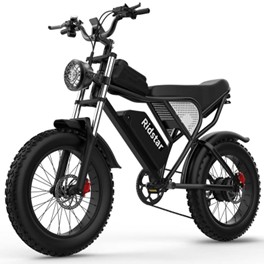
The Ridstar Q20/Q20 Pro -- the exact model covered by both CPSC warnings. Photo: CPSC.
Most recall coverage treats each warning as an isolated event. Ridstar's isn't isolated -- it's a pattern. Between March and June 2026, CPSC issued three separate safety warnings covering the same Q20-series e-bikes: two for fire hazards, one for a front wheel that can detach while riding. The manufacturer has not cooperated with CPSC on any of them.
The timeline
Models: Ridstar Q20 and Q20 Pro
Hazard: Batteries and wires can ignite.
Reported incidents: 11 fires, including 1 burn injury, 5 reports of smoke inhalation, and 2 reports of property damage totaling over $40,000.
Models: Ridstar Q20 and Q20 Lite
Hazard: The front wheel can detach without warning while riding.
Reported incidents: 32 reports of the front wheel detaching, including 31 reports of injury -- concussions, broken bones, cuts, scrapes, and bruises.
CPSC's June warning explicitly ties back to the March one: it reminds Q20 owners that the batteries covered by the earlier fire warning "must be disposed of following local hazardous waste disposal procedures" -- meaning some owners are now dealing with two separate hazards on the same bike.
Why there's still no recall
For the fire hazard, CPSC says the manufacturer, Huizhou Xingqishi Sporting Goods Co., Ltd. of China, "refused to agree to an acceptable recall." For the crash hazard three months later, CPSC says the same manufacturer "has been unresponsive to CPSC's requests for information about these products or a recall." There's no replacement program, no refund process, and no fix -- just a warning to stop using the product.
What Ridstar owners should do
If you own a Q20, Q20 Pro, or Q20 Lite: stop riding it. The crash hazard alone -- a front wheel that can come off mid-ride -- is reason enough regardless of which specific unit you have, since CPSC's warning doesn't specify a narrower serial range.
Battery disposal: remove the battery and take it to a household hazardous waste collection center -- never the trash or curbside recycling. Call ahead to confirm they accept lithium-ion batteries.
Report an incident at SaferProducts.gov if you've experienced a fire, smoke, or a wheel detaching.
The buyer's takeaway
A single recall can happen to any brand. A repeat pattern across two unrelated failure modes, with no manufacturer response either time, says something different: this isn't a one-off defect, it's a company that isn't engaging with U.S. product safety oversight at all. Before buying any budget e-bike brand you haven't heard of, it's worth checking whether the battery pack carries UL 2849 certification and whether the frame/fork carries any independent safety testing disclosure -- Ridstar's listings did not.
Sources: CPSC Warning 26-337 (fire, March 19, 2026) · CPSC Warning 26-584 (crash, June 25, 2026)

The open road looks better on a bike that will not catch fire.
Looking for a safer replacement?
Check for UL 2849 certification before you buy, and browse verified eBike shops for guidance on trustworthy brands.
Find eBike Shops Near You →